
Last Updated: October 26, 2026
Quick Summary
The core coffee brewing tips for beginners are simple: use fresh beans, match your grind to your method, brew with water between 195°F and 205°F, and measure a repeatable ratio of one to two tablespoons of coffee per six ounces of water. Get those four basics right and almost any brewing method turns out a solid cup.
- Whole beans stay good longer than pre-ground coffee, which loses flavor within days of grinding.
- A drip coffee maker brews a 24-ounce pot in 5-8 minutes with 24 grams of medium-ground coffee.
- French press uses a coarse grind and a 4-minute steep, then press slowly over about 20 seconds.
- Pour-over calls for a medium-fine grind and a 30-second bloom before the main pour.
- Adjust one variable at a time, since changing three things at once tells you nothing about which one worked.
Table of Contents
- Start With the Right Basics Before You Brew
- Easy Coffee Brewing Methods for Beginners
- The Coffee-to-Water Ratio That Gets It Right Every Time
- The Best Coffee Grind Size for Brewing Your Chosen Method
- Water Temperature and Quality: The Step Most Beginners Skip
- How to Make Coffee Taste Better When It Comes Out Wrong
- Common Beginner Mistakes to Avoid
- Pick Your First Diner Girl Brew Setup
- Frequently Asked Questions
Start With the Right Basics Before You Brew
Good coffee at home comes down to four things: fresh beans, the right grind, clean water, and a ratio you can repeat, the core of all our coffee brewing tips. Get those four right and almost any brewing method will turn out a solid cup. Skip them and no gadget will save you.
At Diner Girl Coffee, we hear the same thing from customers all the time. They want the cup they remember from a booth back home, not a science project.
Two rules carry most of the weight:
- Fresh beats fancy. Whole beans stay good longer than pre-ground coffee, which starts losing flavor within days of grinding.
- Consistency beats perfection. One good scoop and one good pour, repeated daily, beats a complicated method you try once.
If you are still deciding which beans to start with, our guide to the best coffee beans for traditional brew walks through what to look for before you brew your first pot.
Easy Coffee Brewing Methods for Beginners
Three methods cover almost every beginner: drip, French press, and pour-over. Each one asks for a different level of effort, and each one rewards you with a different kind of cup. Pick the one that matches your mornings, not the one that looks best online.
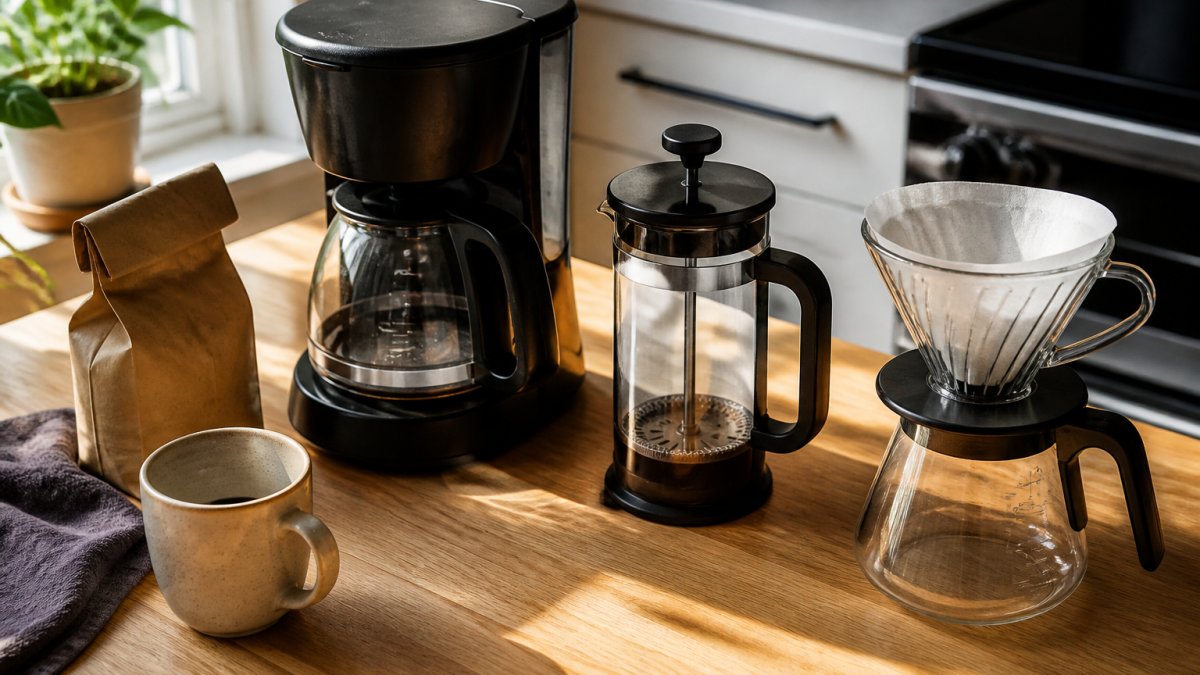
Here is the short version before we break each one down:
| Method | Effort | Brew Time | Best For |
|---|---|---|---|
| Drip coffee maker | Lowest | 5-8 minutes | Busy mornings, big pots |
| French press | Low | 4 minutes steep | Full body, rich flavor |
| Pour-over | Medium | 3-4 minutes | Control and clarity |
| Boiling-water method | Low | 5 minutes | No equipment at all |
What most method roundups skip is the part beginners actually need: exact starting recipes. Below are tested starting points for each method. Use them as written the first time, then adjust one variable at a time.
Drip Coffee Maker: The Set-and-Forget Option
A drip coffee maker is the easiest path to a dependable cup. Add water, add ground coffee, press start, and walk away. The machine handles the rest while you get ready.
Beginner recipe (for a 4-cup / 24-ounce pot):
- Coffee: 24 grams (about 3 level tablespoons) of medium-ground coffee
- Water: 24 ounces of filtered water
- Grind: medium, like coarse sand
Use a medium grind and a standard ratio. If you want the convenience of a single-serve brewer without giving up flavor, our K-Cups deliver the same smooth, comforting blend in a pod.

French press: Full Flavor With Minimal Equipment
A French press gives you a fuller, richer cup with almost no gear. Add coarse ground coffee, pour hot water over it, wait four minutes, then press the plunger down slowly.
Beginner recipe (for a 3-cup / 18-ounce press):
- Coffee: 30 grams (about 4 level tablespoons) of coarse-ground coffee
- Water: 18 ounces, just off the boil (195°F-205°F)
- Grind: coarse, like breadcrumbs
Two things matter here. Use a coarse grind so the mesh filter does not clog, and do not press too hard. A slow, steady plunge keeps the sediment out of your cup.
Pour-Over: More Control, Still Simple
Pour-over asks for a little more attention, and that attention pays off. You control the pour, the timing, and the contact between water and grounds. The result is a cleaner, brighter cup.
Beginner recipe (for one 10-ounce mug):
- Coffee: 18 grams (about 2 heaping tablespoons) of medium-fine ground coffee
- Water: 10 ounces, just off the boil
- Grind: medium-fine, like table salt
The basic rhythm is simple: wet the filter, add medium-fine grounds, pour a small amount of hot water (about twice the weight of the coffee) to bloom the coffee, wait 30 seconds, then pour the rest in slow circles.
Boiling-Water Method: No Equipment Required
If you have a pot, a mug, and a way to strain, you can brew coffee. This is the oldest method and the cheapest way to start.
Beginner recipe (for one 8-ounce mug):
- Coffee: 14 grams (about 2 level tablespoons) of coarse-ground coffee
- Water: 8 ounces, brought to a boil and rested 30 seconds
- Grind: coarse
Let the grounds settle for a minute before pouring so less sediment reaches the cup. It will not be as clear as a pour-over, but it is a real cup of coffee with zero specialty gear.
The Coffee-to-Water Ratio That Gets It Right Every Time
The coffee-to-water ratio is the amount of ground coffee you use for a given amount of water, and it decides how strong your cup turns out.
We recommend measuring by weight if you own a kitchen scale. It removes the guesswork and makes your cup repeatable.
- Too weak? Add a little more coffee, not more time.
- Too strong? Add a splash of hot water to the cup.
- Inconsistent? Use the same scoop or scale every single time.
A coffee scoop works fine for beginners. Just use the same one daily so your results stay steady.
The Best Coffee Grind Size for Brewing Your Chosen Method
Grind size is how fine or coarse your coffee grounds are, and it must match your brewing method. Too fine and the water pulls out bitterness. Too coarse and the cup tastes weak and thin.
Match the grind to the method:
- Drip coffee maker: medium grind, like coarse sand
- French press: coarse grind, like breadcrumbs
- Pour-over: medium-fine grind, like table salt
A burr grinder gives you the most even grind, but a simple blade grinder works for beginners who pulse in short bursts. If you want to grind fresh for any method, our whole bean coffee lets you set the grind to match whatever you brew.

Water Temperature and Quality: The Step Most Beginners Skip
Water makes up almost all of your cup, so it deserves attention. The target water temperature for brewing is between 195°F and 205°F, just below a rolling boil. Water that is too hot scorches the grounds and brings out bitterness; water that is too cool under-extracts and leaves the cup sour and thin.
Hitting the Right Temperature Without a Thermometer
Most beginners do not own a brewing thermometer, and you do not need one to get close. Two reliable tricks:
- The 30-second rest. Bring water to a full boil, then take the kettle off the heat and let it sit for about 30 seconds before pouring. That pause drops the water into the target range at typical kitchen altitude.
- The ice-cube method. If you want to brew immediately after boiling, drop one or two ice cubes into the kettle or carafe and stir. The meltwater cools the water quickly and predictably.
If you do own an instant-read thermometer, use it once to calibrate your 30-second rest, then trust the habit. A $10 thermometer is one of the cheapest upgrades in home brewing because it removes the biggest hidden variable.
Why Water Quality Changes the Taste
Water quality matters just as much as temperature. Use filtered water when you can. As the Specialty Coffee Association's brewing guidance notes, water chemistry affects extraction in ways most home brewers never consider.
The practical version for beginners:
- Chlorine and chloramine give coffee a flat, medicinal, or pool-like taste. A basic carbon filter pitcher removes most of it.
- Very hard water (high mineral content) can mute acidity and leave scale in your kettle and machine. If your tap water leaves white deposits, filter it or use bottled spring water.
- Distilled or reverse-osmosis water is too mineral-free and can make coffee taste hollow. If that is your only option, a pinch of mineral blend or a splash of tap water restores some body.
A simple test: brew two cups, one with tap and one with filtered water, using the same beans and dose. Most people can taste the difference immediately, and that comparison tells you more than any water report.
A Beginner Water Checklist
- Start with filtered water, not straight tap.
- Boil, then rest 30 seconds before pouring.
- Keep your kettle descaled; mineral buildup affects both temperature and taste.
How to Make Coffee Taste Better When It Comes Out Wrong
When a cup comes out wrong, the fix is almost always in the grind, the ratio, or the water. Learning to how to make coffee taste better starts with reading what your palate is telling you.
Here is a simple troubleshooting guide:
| Taste Problem | Likely Cause | Fix |
|---|---|---|
| Bitter, harsh | Over-extraction, grind too fine | Coarser grind, shorter brew time |
| Sour, sharp | Under-extraction, grind too coarse | Finer grind, longer brew time |
| Weak, watery | Too little coffee | Add coffee to the ratio |
| Muddy, silty | Grind too fine for the filter | Coarser grind |
| Flat, dull | Stale beans or poor water | Fresh beans, filtered water |
Start with one change at a time, the golden rule behind all coffee brewing tips. Changing three things at once tells you nothing about which one worked.
Common Beginner Mistakes to Avoid
Most beginner problems come from a short list of habits. Fix these and your coffee improves right away.
- Stale pre-ground coffee. Grind fresh when you can, and store beans in an airtight container away from light.
- Guessing the ratio. Use a scoop or scale so every cup starts the same.
- Dirty equipment. Rinse the French press and clean the drip machine regularly. Old oils taste bitter.
Watch out: storing beans in the fridge feels smart but backfires. Moisture and odors creep in, and the beans go flat faster than they would on a cool, dark shelf.
Pick Your First Diner Girl Brew Setup
Your first setup should match your mornings, not a hobbyist's wish list. If you want speed, go with a drip machine or K-Cups. If you want flavor with minimal gear, a French press is the honest choice.
Here is how we would set up a beginner by effort level:
- Lowest effort: a drip coffee maker plus our regular blend coffee, ground and ready to brew.
- Low effort, single cup: a K-Cup brewer plus our signature K-Cups.
- A little more hands-on: a French press plus whole bean coffee you grind coarse.
Whichever you choose, keep the basics from this guide in place: fresh beans, a measured ratio, water just off the boil, and clean gear. Those four habits matter more than any single purchase.

Frequently Asked Questions
What is the easiest way for a beginner to brew coffee at home?
A drip coffee maker is the simplest starting point. Add a filter, measure your grounds, fill the reservoir with cold water, and press start. You do not need to watch a timer or stir anything. If you want a stronger cup with almost no cleanup, a French press takes about four minutes of steeping and one plunge. Both methods reward good coffee brewing tips like a consistent coffee-to-water ratio and a medium grind, so learn one method well before adding another.
How much coffee should I use for one cup?
A reliable starting point is about 2 tablespoons of ground coffee for every 6 ounces of water. That lands you near a 1:16 coffee-to-water ratio by weight, which most people find balanced. If your cup tastes thin or watery, add a little more coffee rather than steeping longer. A kitchen scale removes the guesswork entirely: weigh 10 grams of coffee for every 160 grams of water. Adjust from there to match the strong, honest cup you actually want.
What water temperature is best for brewing coffee?
Water between 195°F and 205°F extracts flavor properly without scorching the grounds. Most drip machines handle this for you. With a French press or pour-over, boil water and let it sit for about 30 seconds before pouring. Water straight off a rolling boil is too hot and pulls out bitterness. Never brew with water you would not drink on its own either, since tap water minerals and chlorine come through in the cup.
Why does my home-brewed coffee taste bitter or sour?
Both point to extraction, and the fix is usually grind size. Bitter, drying coffee is over-extracted, so use a coarser grind or shorten the brew time. Sour, thin coffee is under-extracted, so grind finer or steep longer. Change one variable at a time so you know what worked. Freshness matters too: whole beans ground just before brewing, like Diner Girl's 12 oz whole bean bag at $13.00, give you far more control than pre-ground coffee that has been open for weeks.
Building a coffee routine that actually sticks is less about gear and more about repetition. At Diner Girl Coffee, we make that easy with classic diner-style blends, convenient K-Cups, and whole bean options you can grind to match your method. Start with one method, one ratio, and one bag of fresh coffee. Get started with Diner Girl Coffee and bring that hometown diner cup back to your own kitchen.
