
Last Updated: October 28, 2026
Quick Summary
The best way to keep coffee fresh during coffee shipping is to ship whole beans in a bag with a one-way degassing valve and a foil-lined barrier film, sealed tightly and packed in a sturdy, light-colored box. Ship soon after roasting, log the roast date, and let cold parcels reach room temperature before opening.
- Whole beans keep better than ground coffee because less surface is exposed to air.
- Choose a bag with a one-way degassing valve placed on the front panel, away from seams.
- Use a metallized or foil-lined laminate, since clear or paper pouches let light and oxygen through.
- Ship close to the roast date and print the roast date clearly on every order.
- Let a cold parcel come to room temperature before opening to avoid condensation on the beans.
Table of Contents
- Why Coffee Loses Freshness in Transit
- Step 1: Choose Whole Beans or Ground Coffee for Shipping
- Step 2: Pick Packaging With a Degassing Valve and Barrier Film
- Step 3: Seal Bags Properly to Limit Oxygen and Moisture
- Step 4: Time the Roast Date and Shipping Window
- Step 5: Protect the Box From Heat, Humidity and Light
- Common Packaging Mistakes to Avoid
- Storing Your Diner Girl Coffee When It Arrives
- Frequently Asked Questions
Why Coffee Loses Freshness in Transit
Coffee starts losing its character the moment it is roasted. Oxygen, moisture, heat and light all speed that process along, and a package in transit is exposed to every one of them, which is why coffee shipping demands careful packaging.
This is why shipping matters so much. A parcel can sit in a warehouse, ride in a hot truck and wait on a doorstep before anyone opens it. Each stop adds risk. The goal is simple: slow down oxygen exposure, block moisture, keep the bag away from light and heat, and get the beans to the customer while they are still at their best.
Step 1: Choose Whole Beans or Ground Coffee for Shipping
The first decision is the format. Whole beans keep better than ground coffee because less of the surface is exposed to air. Grinding breaks the beans open, and that speeds up staling.
- Whole beans: Better for longer transit and for buyers who want to keep coffee fresh for several weeks after it arrives.
- Ground coffee: Fine for a quick delivery, but it loses flavor faster and should be used sooner.
Our Whole Bean Coffee comes in a 12 oz bag of whole beans, so you can grind it fresh for your preferred brewing method. Our Regular Blend Coffee is sold as a 12 oz ground bag, and our K-Cups come in a box of 12.
Step 2: Pick Packaging With a Degassing Valve and Barrier Film
Packaging does most of the work in coffee shipping, and the difference between a bag that arrives fresh and one that arrives flat comes down to two components: the barrier film and the one-way degassing valve. Most storage guides stop at "use an airtight bag." For shipping, you need to understand what each layer actually does, because a parcel spends hours or days under pressure changes, temperature swings, and handling that a pantry shelf never sees.
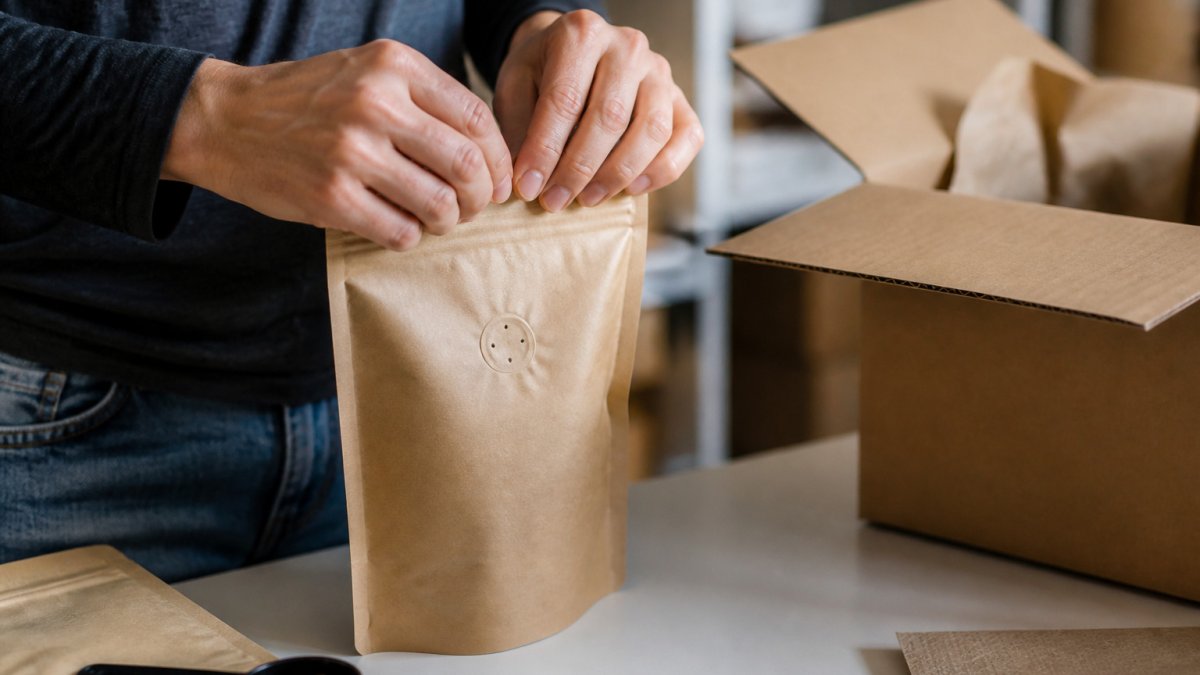
Barrier film. The inner layer of a coffee bag is a laminate, not a single plastic sheet. Common constructions pair a metallized or foil layer (which blocks light and resists oxygen transmission) with a structural outer layer (for puncture and tear resistance) and a food-safe inner sealant layer (for heat sealing). When you compare bags, ask for the oxygen transmission rate (OTR) of the film, a lower OTR means less oxygen crosses the material over time. A common pattern among roasters shipping whole beans is a metallized or foil-lined laminate rather than a clear or paper-only pouch, because paper and clear film let both light and oxygen through. Opaque or foil-lined bags also solve the light problem without a separate outer wrap.
One-way degassing valve. Freshly roasted coffee releases carbon dioxide for several days after roasting (pubmed.ncbi.nlm.nih.gov). In a sealed bag, that gas has nowhere to go, so the bag swells and can pop a seam or balloon in a hot truck. A one-way valve vents CO2 out while closing against outside air coming in. Two practical points matter for shipping:
- Valve placement: the valve should sit on the front panel, not on a seam or corner where it can be crushed or folded shut in transit.
- Valve condition: a damaged or clogged valve either traps gas (swelling, seam failure) or fails to seal (oxygen ingress). Inspect valves before packing, and avoid stacking heavy boxes directly on valve faces.
Seal integrity. The top seal is the most common failure point. A heat seal should run the full width of the bag with no wrinkles, folds, or coffee dust trapped in the seam, a single grounds particle in the seal channel creates a leak path. After sealing, a quick squeeze test (press the bag gently and listen or feel for escaping air at the seam and valve) catches most failures before the box closes. Resealable zippers and tin ties help the customer after opening, but they are not a substitute for a proper heat seal on the shipping bag.
!Close-up of hands sealing a kraft coffee bag with a one-way degassing valve on a clean packing table next to a shipping box
Step 3: Seal Bags Properly to Limit Oxygen and Moisture
A good bag only works if it is sealed well. Press out as much air as you can before closing the top, then check that the seal runs the full width of the bag with no gaps or wrinkles.
Step 4: Time the Roast Date and Shipping Window
Timing matters as much as packaging. Coffee tastes best within a window after roasting, and shipping should fit inside that window. Ship soon after roasting, print or note the roast date clearly, and avoid holding stock for weeks before it leaves the warehouse.
Here is a quick way to plan:
- Roast close to the shipping date
- Ship the same week when possible
- Choose faster delivery for ground coffee
- Log the roast date on every order
Step 5: Protect the Box From Heat, Humidity and Light
The outer box is the last line of defense, and it is where shipping-specific risks show up that home-storage advice never covers. A parcel can move from a cold warehouse to a hot delivery truck to a sunny porch in a single day. Each transition stresses the coffee inside, and the box either buffers that stress or amplifies it.
Temperature swings and condensation. The biggest transit risk is not a single hot day, it is the swing. Coffee that has chilled in a cold cargo hold or winter delivery truck can form condensation on the bag and beans when it moves into a warm building. Moisture on the bean surface accelerates staling and can promote mold. Practical precautions:
- Let a cold parcel come to room temperature before opening the inner bag, so condensation forms on the outside of the packaging rather than on the beans.
- In hot weather, avoid leaving parcels on sunny porches; request hold-at-location or signature delivery when the forecast is extreme.
- In cold weather, expect a longer acclimation period and note it for the customer.
Heat exposure in transit. A closed truck or delivery van in summer sun can reach well above ambient temperature. Dark outer boxes absorb more heat than light ones, and a box pressed against a sunny window in a sorting facility gets hotter still. Choose a light-colored or plain corrugated outer box where possible, and avoid shipping during forecast heat waves when you can schedule around them. For ground coffee, which stales faster, a faster service level is worth the cost in hot months.
Humidity and moisture barriers. Corrugated cardboard absorbs moisture and loses strength when damp, which can crush the inner bag and compromise its seal. A poly mailer or a moisture-resistant outer wrap over the box helps in humid climates and rainy seasons. Keep boxes off damp floors in the warehouse and out of direct contact with exterior walls.
Handling and crush protection. Sorting equipment and stacked pallets crush boxes. Pad the inner bag so it cannot rub against the box wall or puncture on a corner, and avoid over-packing a box so full that the seams split under pressure. A box that arrives crushed has often already flexed the bag enough to stress the seal.
Seasonal and regional planning. A shipping calendar that ignores climate will underperform. In hot, humid regions, prioritize faster service, moisture-resistant outer packaging, and light-colored boxes. In cold regions, plan for condensation on arrival and communicate acclimation steps to the customer. In temperate regions, the main risks are handling damage and delayed delivery, build in a buffer day so a late parcel does not sit over a weekend.
- Use a sturdy, light-colored outer box that keeps the bag from crushing
- Add padding so the bag does not rub or puncture
- Use a moisture-resistant outer wrap in humid or rainy conditions
- Avoid shipping during heat waves when possible, and choose faster service in hot months
- Tell customers to let cold parcels acclimate before opening the inner bag
Heat, humidity and handling each stress coffee in transit, so the outer box matters. The table below sums up the main risks and how to counter them.
| Risk | Cause | Fix |
|---|---|---|
| Condensation | Cold parcel moves into a warm building | Let parcel reach room temperature before opening |
| Heat exposure | Hot trucks, sunny porches, dark boxes | Use light-colored boxes; avoid heat waves |
| Moisture damage | Damp corrugated cardboard | Add a moisture-resistant outer wrap |
| Crushed bag | Stacked pallets, sorting equipment | Pad the bag; avoid over-packing the box |
| Seam failure | Pressure from crushing or flexing | Keep padding between bag and box wall |
Common Packaging Mistakes to Avoid
Most freshness problems come from a few avoidable errors. Watch out for these:
- Using a bag without a degassing valve, which can trap gas and cause swelling or stale flavor
- Shipping ground coffee in a thin, unsealed pouch, which exposes it to air almost immediately
- Forgetting the roast date, so the customer cannot judge freshness
- Leaving the bag open on the counter, which lets moisture and air in
- Storing coffee near the stove or in a sunny window after it arrives
Storing Your Diner Girl Coffee When It Arrives
Once your coffee arrives, the job shifts to home storage. Keep the bag sealed, store it in a cool, dark, dry spot, and open it only when you need it. Whole beans should be ground just before brewing, while the Regular Blend can go straight into the brewer.
Our Regular Blend Coffee is a medium roast with a balanced, comforting flavor, and it is sold as a 12 oz ground bag. You can reorder the Regular Blend whenever your supply runs low.

Frequently Asked Questions
How should coffee be packaged for shipping?
Use an airtight, high-barrier bag with a one-way degassing valve. The valve lets carbon dioxide released after roasting escape without letting oxygen in. Seal the bag fully, avoid crushing it, and pack it in a sturdy box with cushioning so it stays intact through transit. Resealable closures such as zippers or tin ties help keep the coffee fresh after the bag is opened at home.
Should coffee be shipped as whole beans or ground?
The Whole Bean Coffee listing says the beans can be ground for your preferred brewing method.
How long does coffee stay fresh after roasting?
Whole beans in a sealed, cool, dark bag keep most of their character for a few months after roasting. Ground coffee loses flavor much faster, often within weeks. Check the roast date on the bag and ask for a recent roast when ordering, since the transit window eats into the time your coffee has left to taste its best.
How should I store coffee when it arrives?
Keep the coffee in its sealed bag or an airtight container, away from heat, sunlight and humidity. A cupboard or pantry works well. Open the bag only when you need it and reseal it tightly after each use. Freezing can preserve flavor for open bags, but once you remove a portion, avoid returning it to the freezer to prevent moisture condensation.
Tip: Once you know the roast date and storage habits that work for you, the rest is easy. Keep the bag sealed, and enjoy every cup while it tastes its best.
